
Last Updated on June 7, 2026 by Ed Joven
Why Food and Entertainment Are Becoming One Lifestyle Trend in Asia
Food and entertainment are merging across Asia because the home has become a small media venue. Dinner no longer ends when plates hit the table. It stretches across streaming queues, cricket fixtures, mobile games, group chats, delivery riders, and family recipes that still smell better than anything on a screen. The shift is visible in a simple Friday plan: cook something sharable, turn on the match, keep the phone nearby, and let the room decide the pace.
The Kitchen Has Become the Control Room
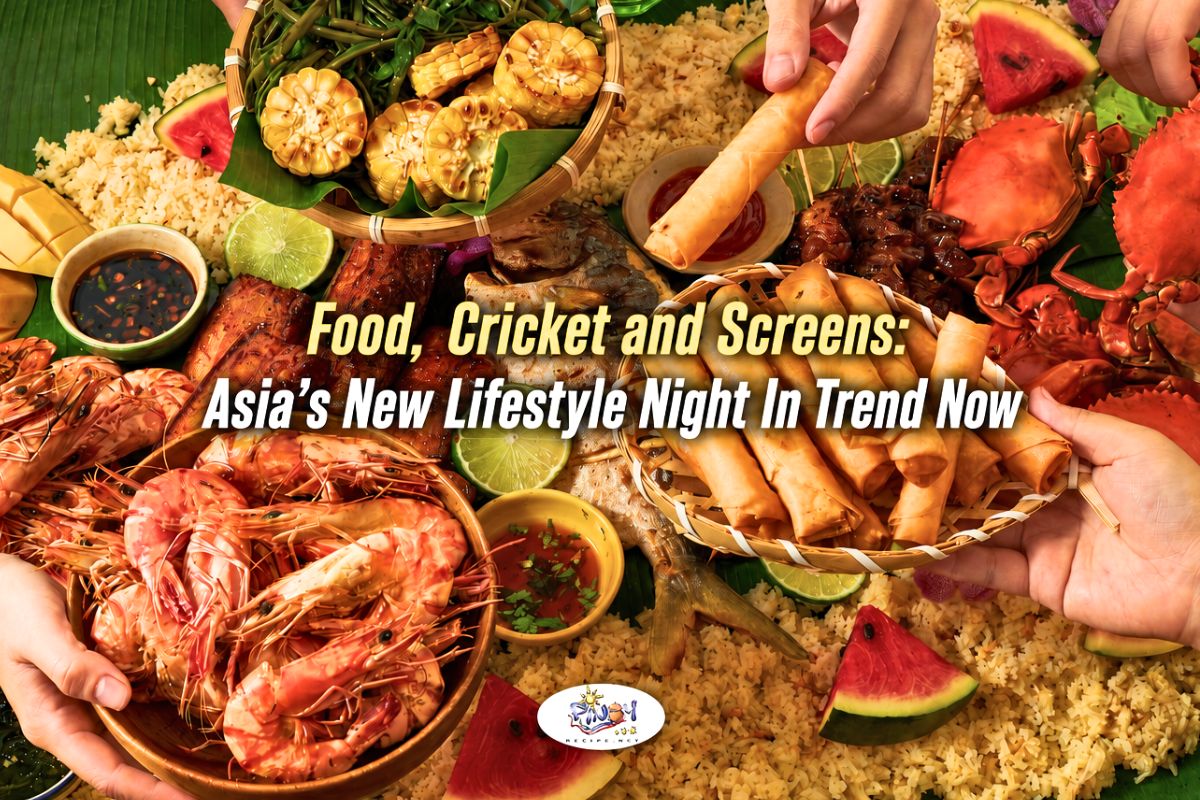
Asian food culture has always understood group energy. A Filipino spread of adobo, pancit canton, lumpia shanghai, and rice is built for return visits to the table. Indian snacks, Korean fried chicken, Indonesian satay, Thai grilled meats, and Japanese convenience-store bites all work because they can survive a pause, a replay, or a sudden argument about a decision on screen.

The old division between “meal time” and “screen time” is weakening. A cook may follow a recipe video while stirring sauce, answer a family message while plating rice, then sit down as the first over begins. That does not make the meal less serious. It makes the meal part of the event.

Digital Habits Changed What People Want From Dinner
The hard numbers help explain the behavior. DataReportal’s Digital 2026 overview reports that more than 6 billion people now use the internet, while PwC projects global entertainment and media revenue will reach $3.5 trillion by 2029. The domestic meaning is plain enough. Screens are folded into ordinary leisure.
That changes recipes. A good night-in dish now needs more than flavor. It needs stability, shareability, and forgiveness. Baked rice, skewers, dumplings, grilled fish, wings, noodle trays, and vegetable fritters all do the job because they let people eat in waves rather than on command.
Cricket Gives the Evening a Clock
Cricket is one of the cleanest bridges between food and entertainment because it gives the night structure. The IPL has a rhythm that suits dinner: pre-match chatter, powerplay snacks, heavier plates in the middle overs, tea or sweets during the chase. The official IPL match centre now functions as a household timetable during the season, with fixtures, squads, toss updates, scorecards, and match videos feeding the conversation.
That rhythm also explains why sports apps sit naturally beside food and streaming habits. Fans already read team news, check batting orders, compare death-over records, and watch the weather before the first ball. A cricket fan who studies those details before placing a measured stake may treat best app for IPL betting as one more tool inside the match-night routine. The value comes from quick access to prematch and live markets, not from replacing judgment. A sensible bettor still fixes a stake limit before the innings starts, because the room gets loudest exactly when discipline matters most.
Why the Snack Table Wins
The strongest entertainment food is rarely delicate. It has to tolerate slow eaters, distracted guests, and sudden noise. Fried rolls, chicken pieces, fish balls, rice bowls, dips, pickles, balut, and grilled skewers all have one underrated advantage: they do not punish the host for missing the perfect serving minute.
This is why Asian households are so well positioned for the trend. Many regional dishes were already designed for shared access rather than plated silence. A movie night or IPL watch party simply gives old food logic a new screen.
Betting, Scores and the Second Plate
The second screen has become the second plate. People move from recipe reels to score alerts, from match memes to delivery updates, from player statistics to family photos in the same half-hour. Someone watches the bowler’s length, someone refills the rice, someone checks whether a batter’s strike rate changes against spin.
During an IPL night, MelBet can fit into that routine for adults who want mobile access to odds, match data, live betting options, and account tools as the game unfolds. The stronger use case is practical rather than dramatic: fast navigation, clear markets, and enough information to make a decision without leaving the room’s conversation. Responsible users still keep the bankroll separate from the match’s mood. A six over long-on may change the price, but it should not change the money plan.
That is where food and entertainment meet most honestly. Both reward timing. Both get better when people know when to slow down.
What Recipe Publishers Should Notice
For recipe publishers, the trend is not just “food plus screens.” It is a change in the job a recipe performs. The best night-in recipes now support movement, conversation, delayed eating, and repeat servings. They are not only instructions. They are social infrastructure.
This makes practical details more valuable: reheating notes, tray sizes, snack quantities, dip pairings, no-mess serving ideas, and make-ahead steps. A recipe for eight people watching cricket requires a different approach from a dinner for two at a quiet table. It needs to respect noise.
Asia did not need digital entertainment to make food social. That part was already there. The screen only made the table brighter, busier, and harder to leave.



Leave a Reply